Project
Into the GroundOur Mother Clay
About theProject
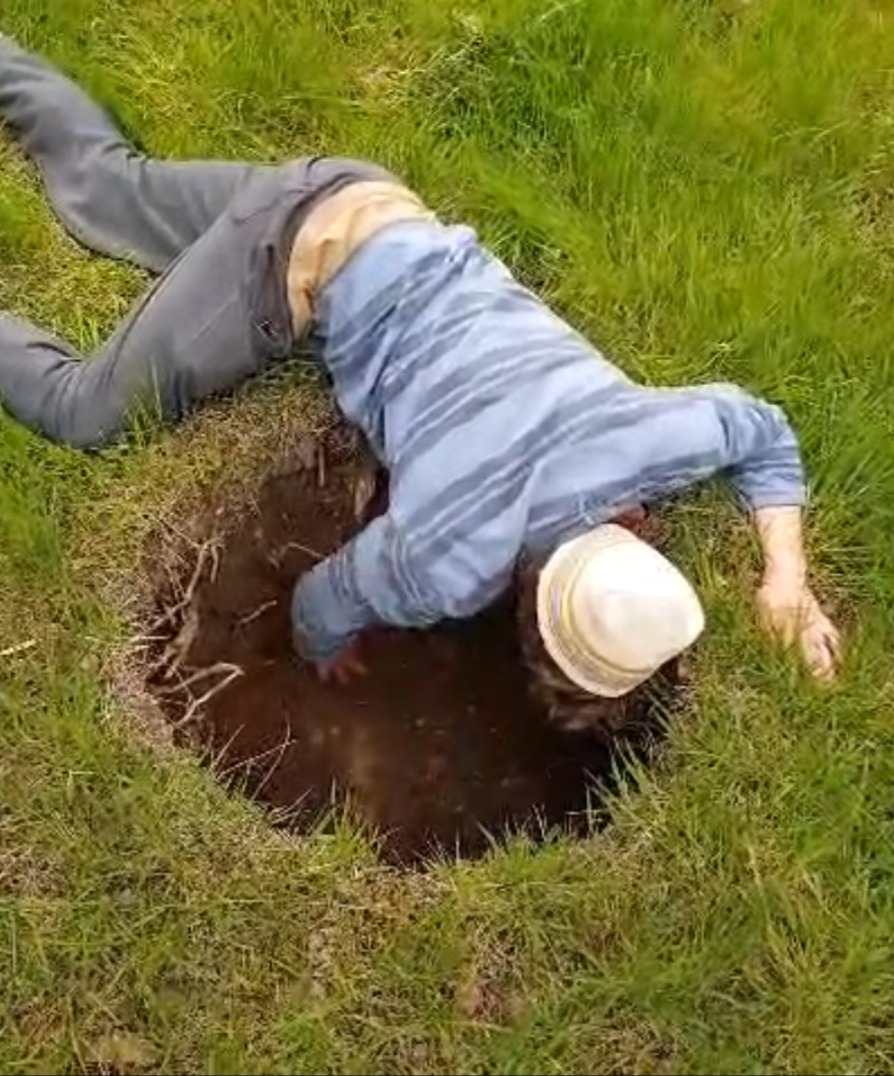
Into the Ground Our Mother Earth is an ongoing land art project about presence, absence, and the way the earth shapes perception.
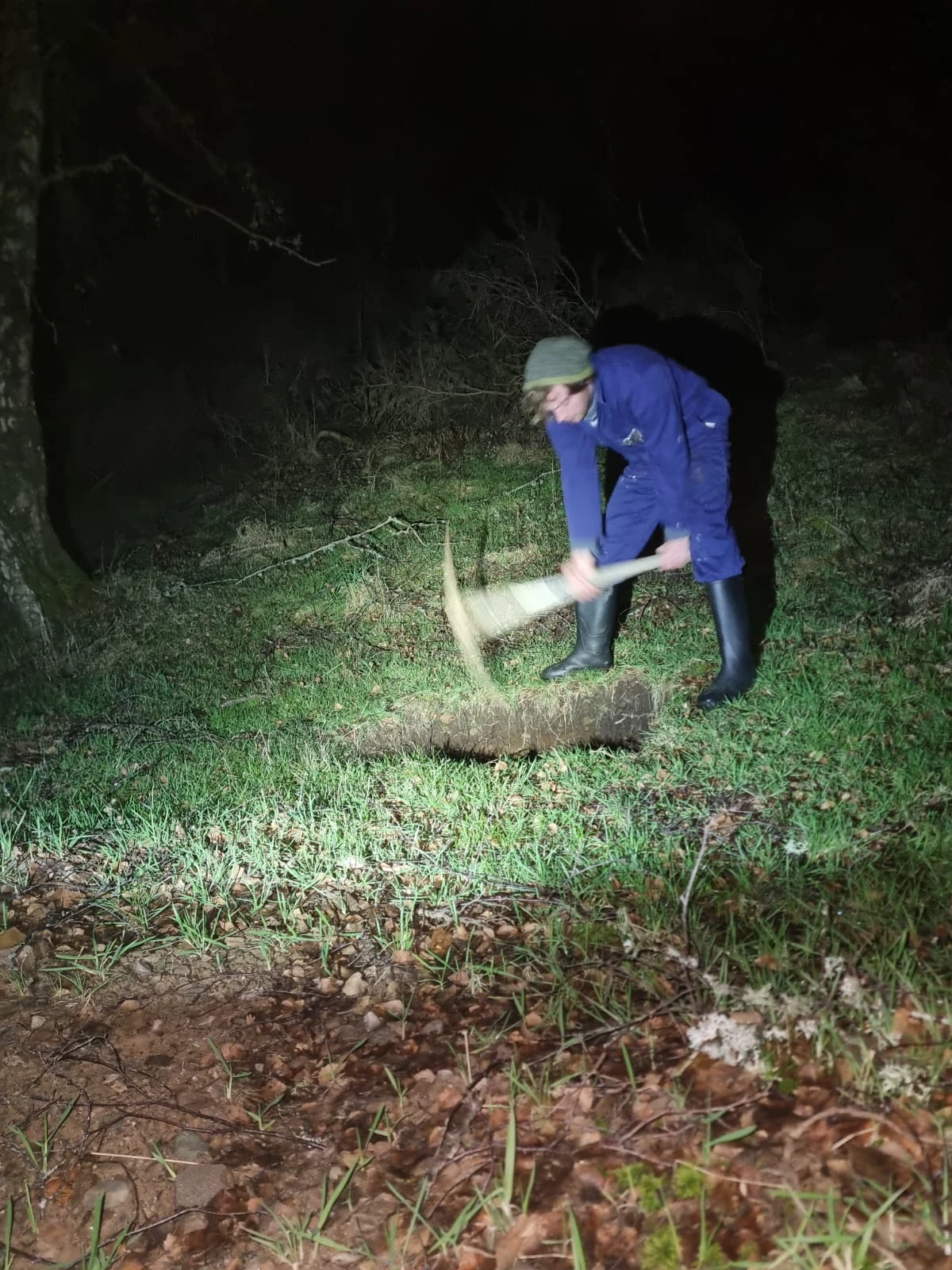
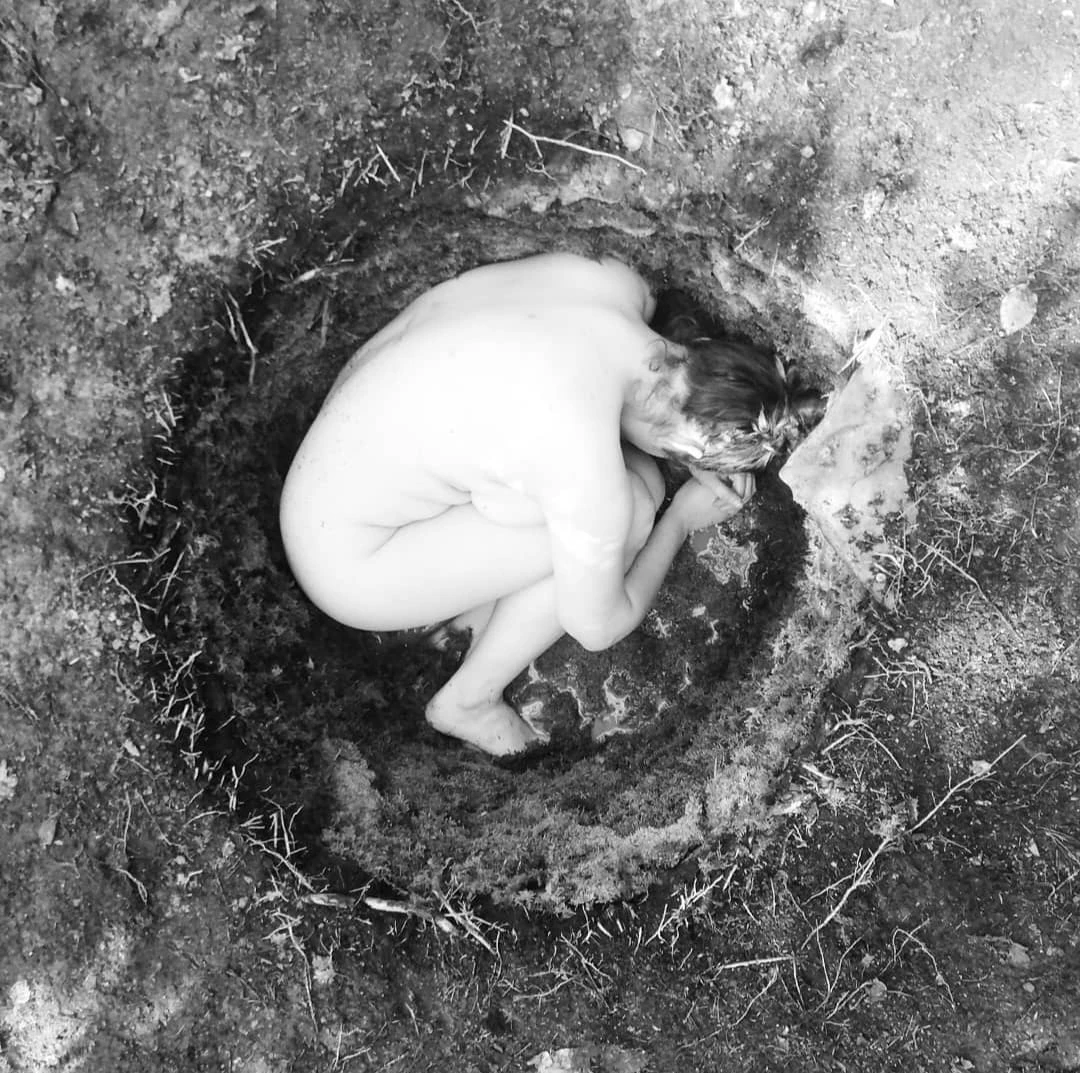
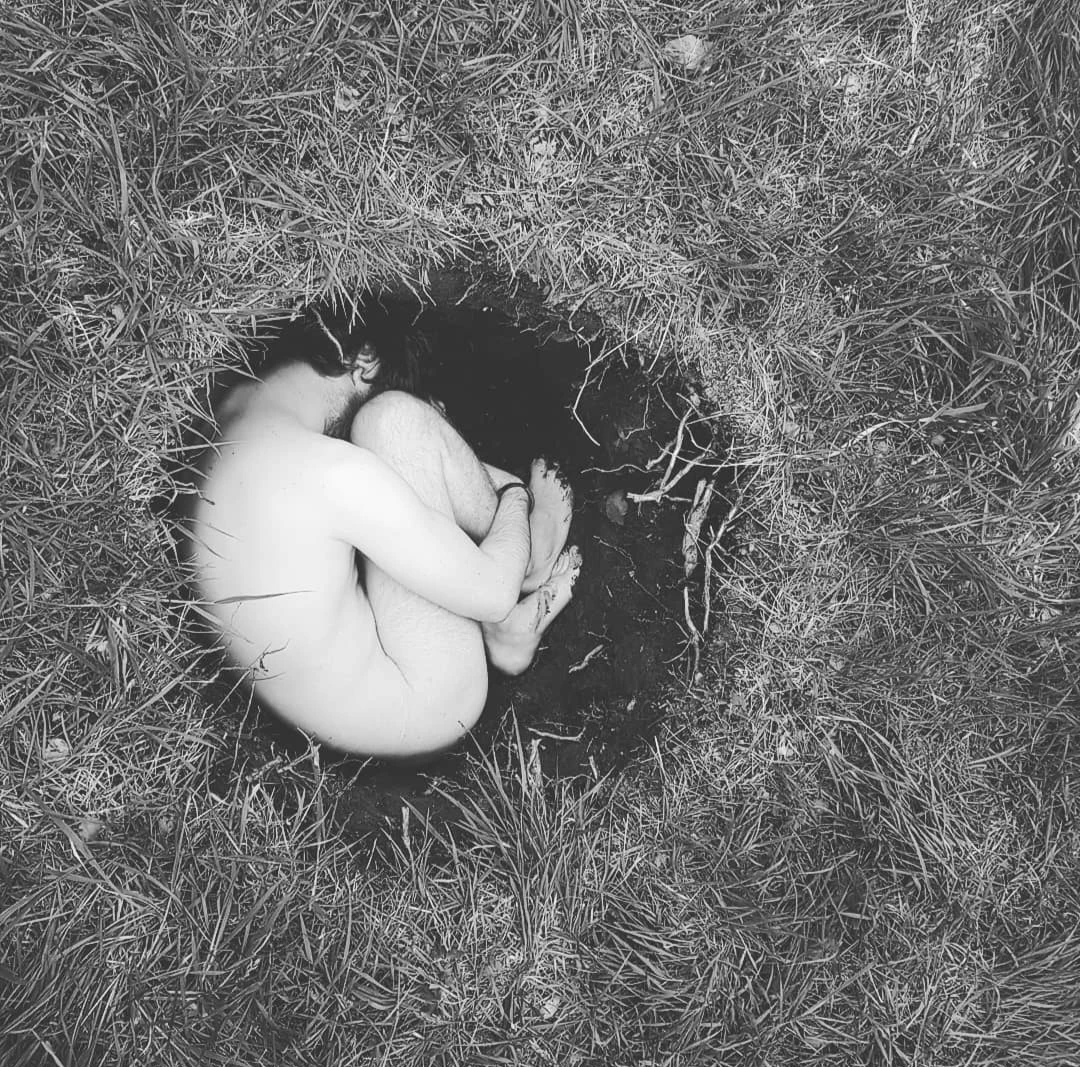
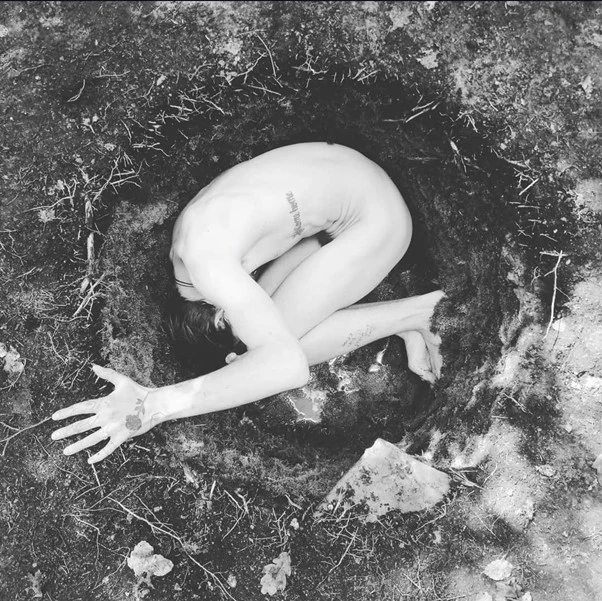
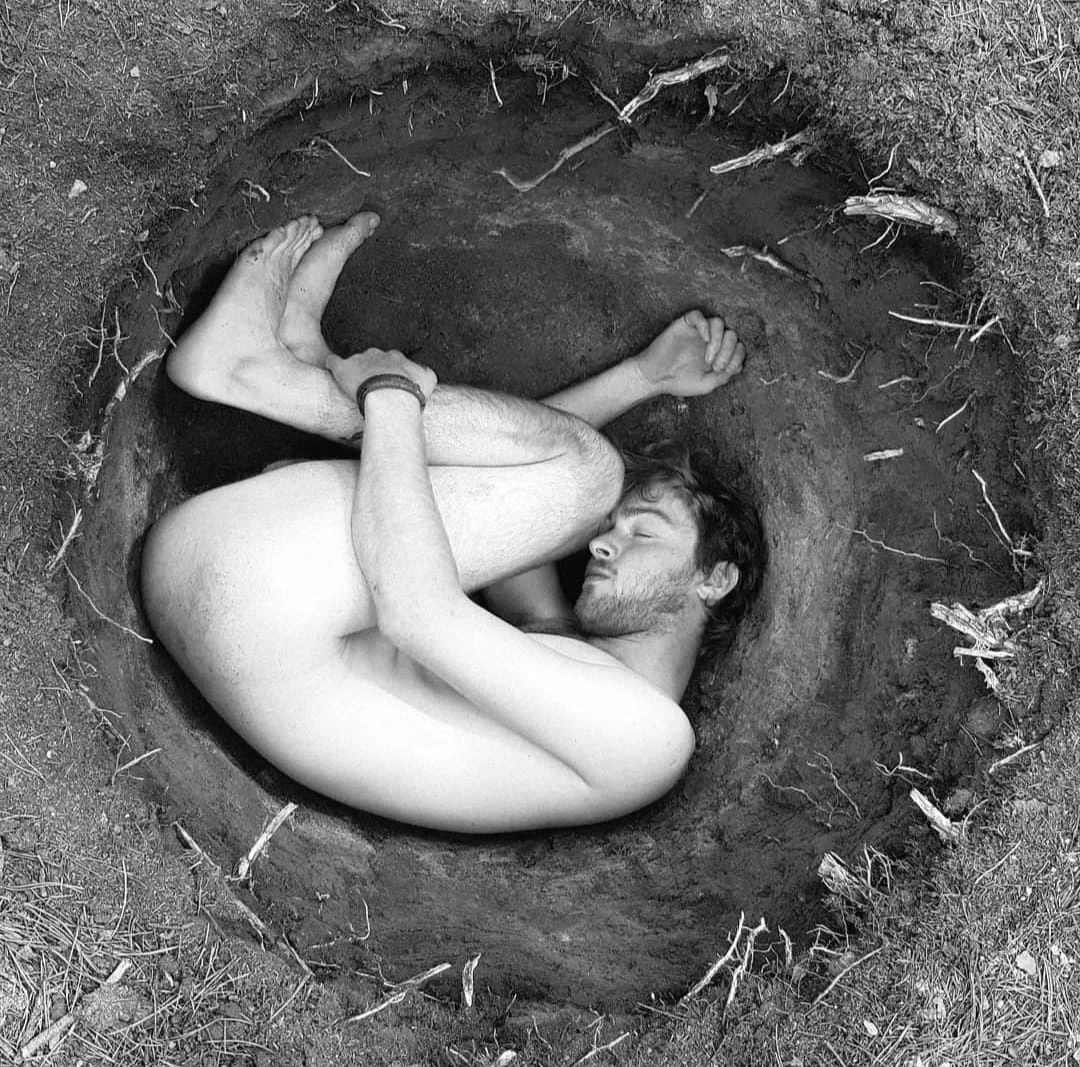
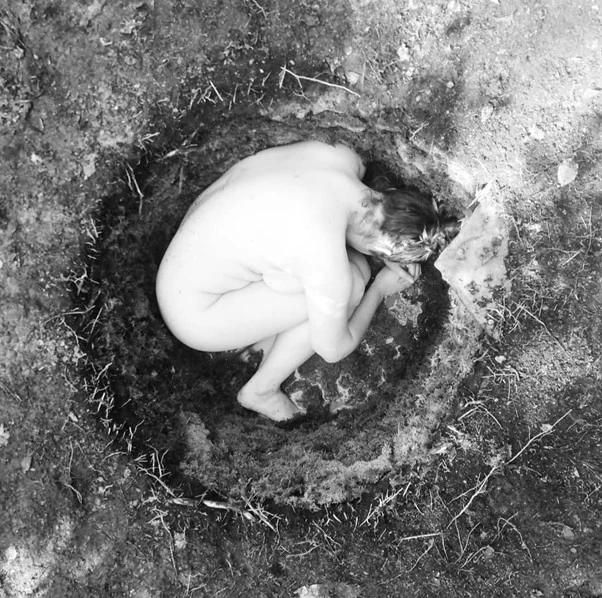
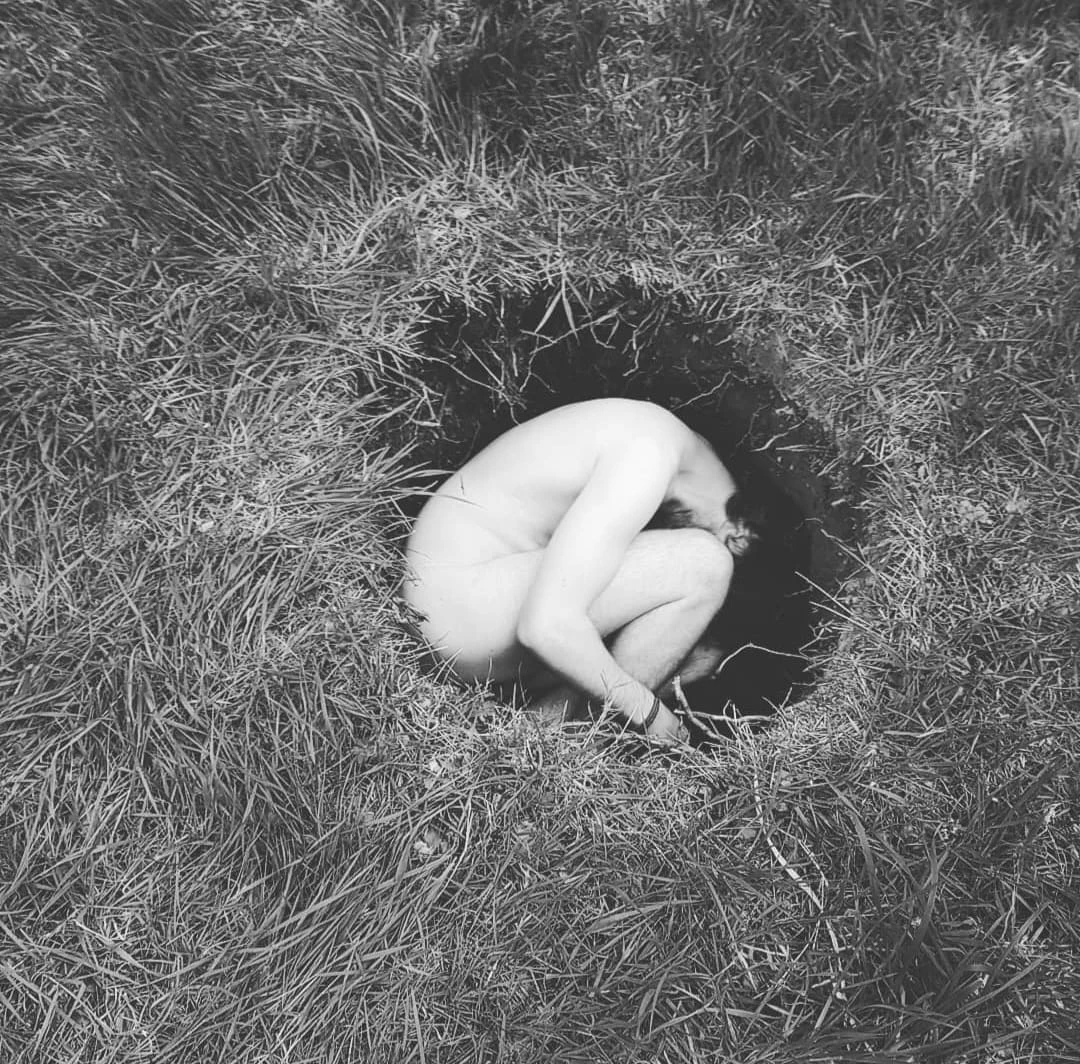
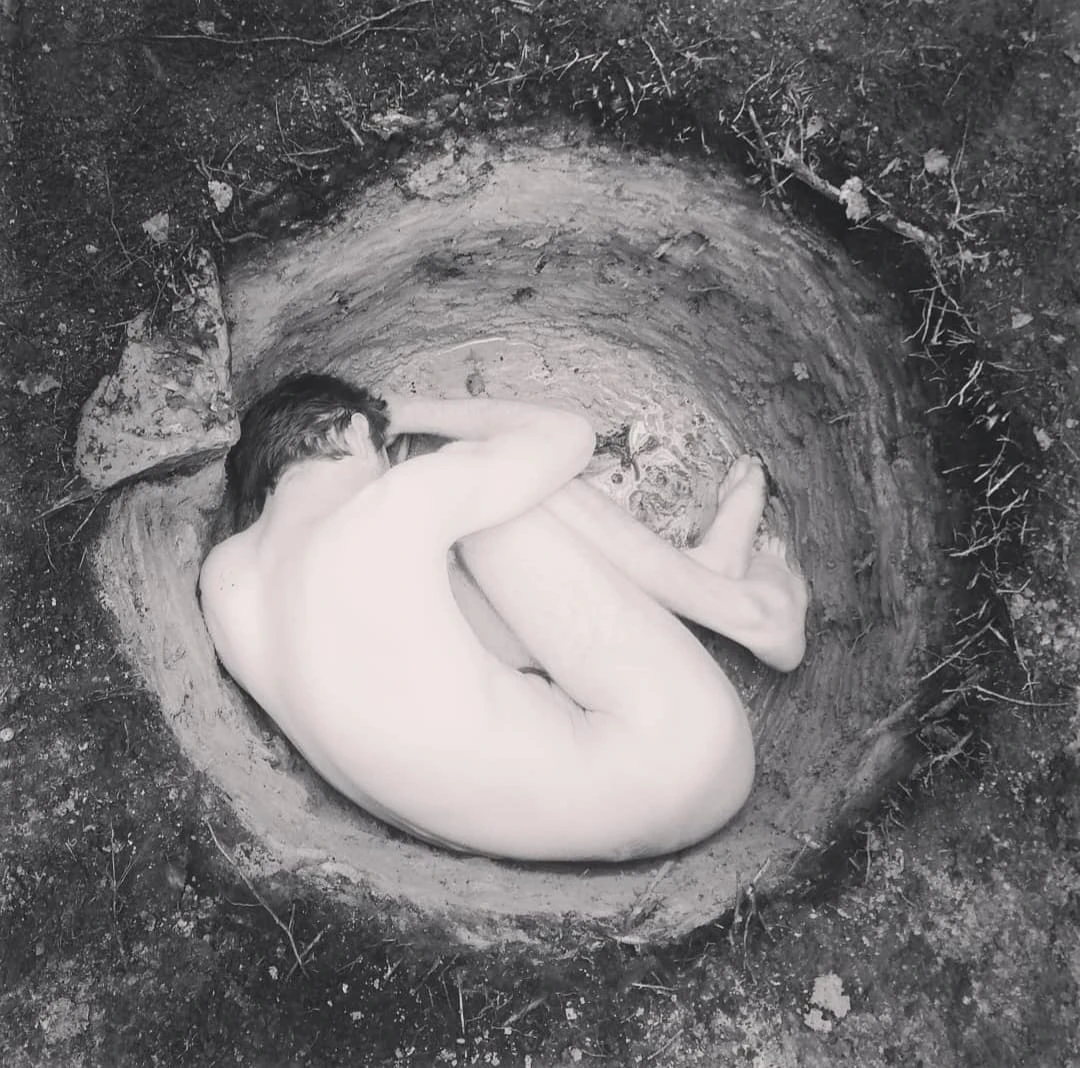
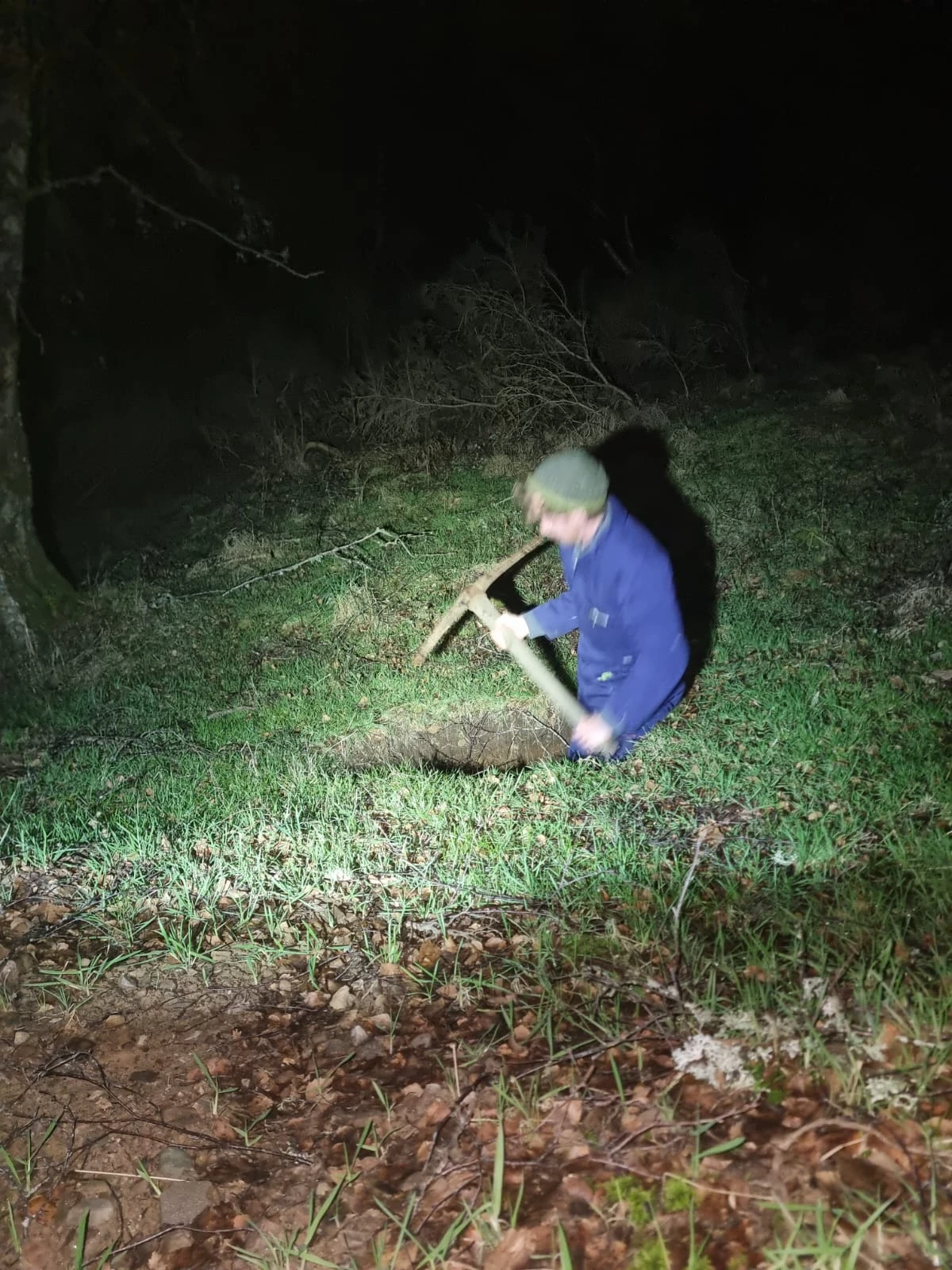
It begins with an act of removal — the digging of holes in beautiful, often remote landscapes. Each hole is designed for the body: to be stood in, sat in, or curled up inside.
Entering one of these voids changes the world around you or at least your perception of it. The horizon rises. Sounds deepen. The air cools and the light interacts with you differently.
The shape of the hole itself also determines how you experience the landscape. For example a circular hole invites a slow, panoramic rotation — a continuous unfolding of the scene as one whole. A square hole offers four still framings and a triangular hole demands three perspectives, sharper and more directional. A water-filled hole might call for you to submerge.
Process
The concept of the hole reaches beyond the physical into the metaphysical. As explored in philosophy and topology, holes are paradoxical presences. They are entities defined by absence, dependent on the material around them for existence.
O'Shaughnessy (2000) describes holes as localized absences, tangible yet immaterial, while Meadows (2013) and McDaniel (2010) see them as relational entities, i.e. things that exist only in relation to their hosts. Martin (1996) calls them negative facts, manifestations of what is not there. These theories inform the practice of Into the Ground, where digging becomes a means of thinking through absence and presence, matter and meaning.
Creating a perfect hole is thus both a sculptural and ontological act. The hole becomes an immaterial particular: a void that has form, a nothing that occupies space. The process of digging is an exploration of the tension between space and substance, between what is removed and what remains.
Holes are ontologically parasitic in that they cannot exist without the thing they inhabit. Yet they are not destroyed when filled, nor created anew when emptied. They are persistent absences that invite interpretation, reflection, and embodiment.
From a structural and topological perspective, holes can be seen as mereologically complex. They have parts, boundaries, and orientations. The distinction between a hollow, a cavity, a perforation, and a tunnel becomes part of the artistic vocabulary. The “perfect” hole, then, is not merely an absence but an intentional shaping of negative space.
In this way, each act of digging becomes a kind of thinking through making. As the artist removes earth in a deliberate circle or square, they do not simply excavate material but they sculpt the unseen, engaging with the metaphysical conditions of existence itself.
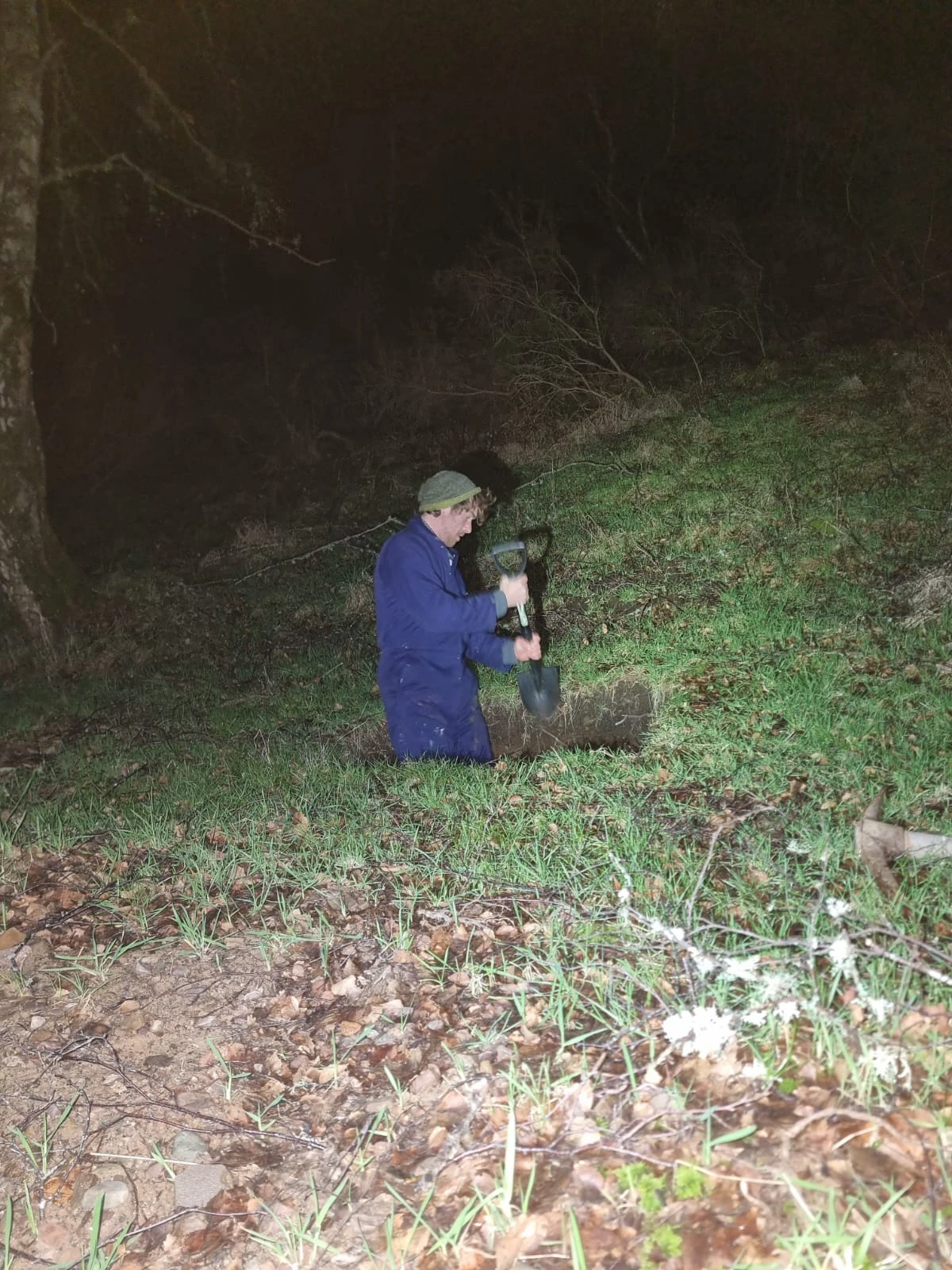
The holes are made through digging, chiselling, pick-axe-ing, sometimes alone, sometimes with others. Each site is chosen for its scenery, acoustic quality, and geological texture. The process is physical and archival. It is a dialogue between body, tool, terrain and time.
Each hole is photographed, mapped, and documented before being allowed to erode, refill, or grow into the landscape.
Meaning and Metaphor
What happens when we take something away? And why do we feel compelled to fill it again? These holes are resonant of the womb and the grave. They embody loss and emptiness, but also the human impulse to make meaning, to fill the void. Each excavation removes something that once was there and replaces it with space, silence, and invitation.
The holes become temporary sanctuaries: spaces to feel the weight of the world pressing in, to listen to the earth, and to rediscover the ground beneath us as something alive.
Participation
Into the Ground is open to collaboration.
You can take part by creating your own hole — anywhere that feels meaningful — and sharing documentation (images, location, notes on the experience).
Submissions will become part of a growing global map and digital archive of holes — a record of where people have entered the ground, and how the world looked from below.