From a hole, an absence, an empty vessel; to a tunnel, a journey a process a rebirth.
Follow on Instagram
If you want to see all of my work, check out my instagram page and follow for more!
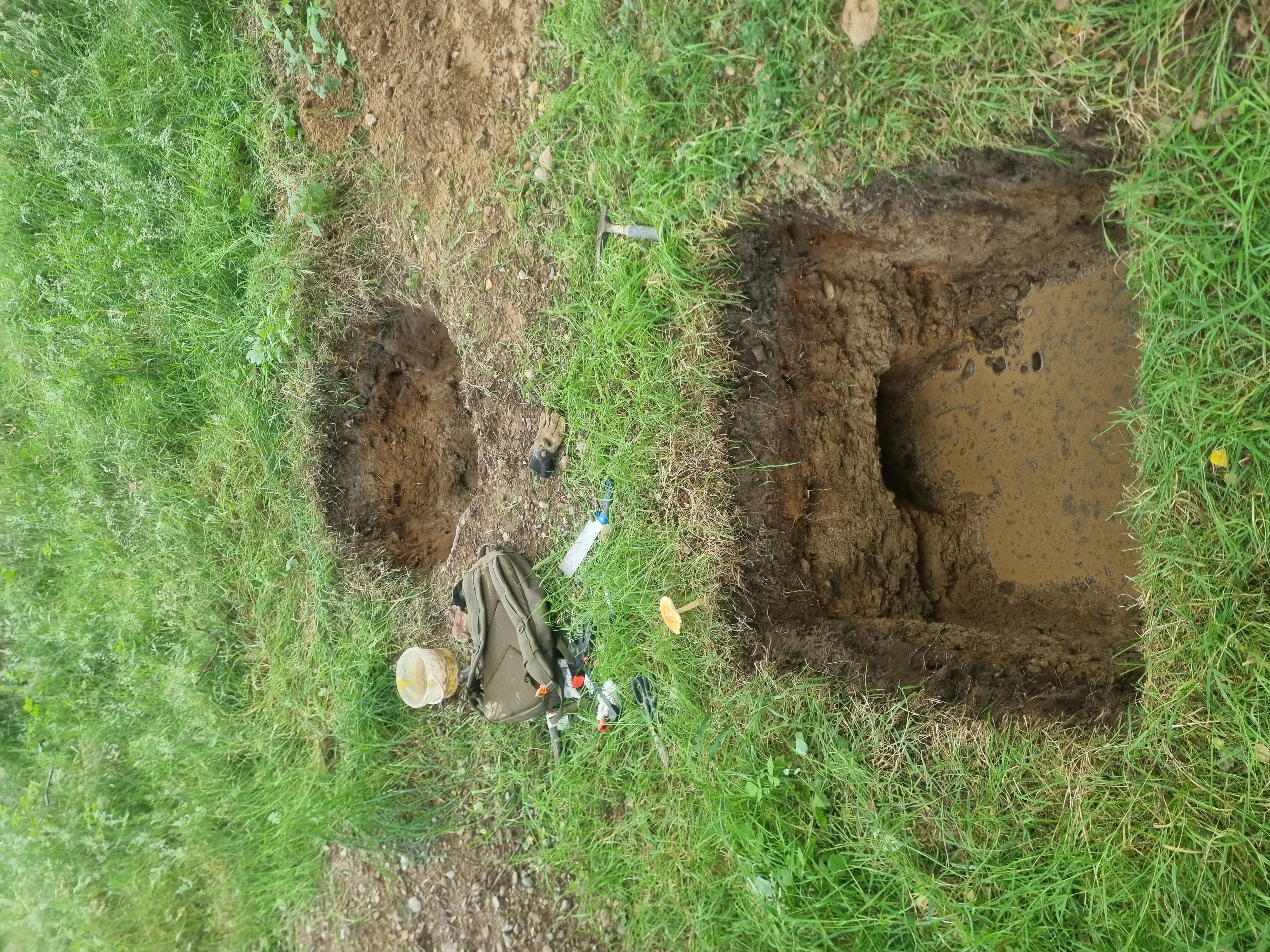
From a hole, an absence, an empty vessel; to a tunnel, a journey a process a rebirth.
The valley was called something in Greek that no one could remember. He had read the name in a guidebook taken from his friends father's house. Stolen without asking. He hadn't opened the book since but carried it anyway, just in case, and could feel its weight against his hip as he and they walked the old road.
Ancient tombs were cut directly into the rock face. Vessels with nothing left inside, waiting for the dead to return to them. He had expected to feel something in their presence. He was the kind of man who expected to feel things and was surprised when he didn't, and had organised much of his adult life around this unsettling dissonance. He was a research assistant for a project on a topic which did not interest him and that required a five hour trip from where he lived. A ten hour round trip to attend pointless meetings that progressed nothing. Every summer he stood in front of an audience of academics and spoke about their findings with a false conviction that was often over-egged.
His friend walked ahead; a large, amiable man who collected and discarded enthusiasms with an ease he had always envied. They had not been friends for long, meeting through a mutual acquaintance and when company was required they met, though he found he could only sustain conversation in fits and bursts. Activities were needed.
As he walled he could feel all his thirty years. He could feel the heat, the full weight of it, pressing down.
The river appeared between a crowd of jagged white rocks at the bottom of the valley. It was crystal clear and inviting. He changed into his trunks underneath a towel and went in after his friend, gasping, and felt the redness of the morning heat still glowing on his skin. The silent tombs and the guidebook's pressure against his hip lifted from him. He laughed. His friend was already hauling himself up onto a boulder the river had smoothed to a kind of throne, and he leaped from it with a shout that scattered the damsel flies upstream.
He floated on his back a while looking at the sky. He thought about his daughter at four years old, sitting in the upstairs window in her pyjamas, watching him in the garden smoking, with an expression he had never been able to decode. The current moved him gently downstream towards the rocks.
It was his friend who saw it first, and didn't stop.
"There's a coin," he said, stepping over a shelf of rock, not breaking stride.
He stood up in the shallows. The riverbed here was pale and legible in the afternoon light, and he saw it immediately: a small disc, the particular silver-grey of old pewter, half-pressed into the silt between two stones. He waded toward it.
Even from standing height he could see it was not a modern coin. It had the irregular, hammered look of something made by hand. The profile on its face was indistinct but classical, a figure in relief perhaps. Either hair or octopus tentacles. Fourth century, he thought, or fifth. It might be worth something. A fortune waiting for him all this time.
He took a breath and went under.
Beneath the surface, everything that had been clear became blurred. The light broke apart. The stones he had seen with perfect clarity from above were now suggestions, textures, ambiguities. He reached for where the coin had been and his hand met silt and then the flat face of a rock, which shifted. The small catastrophe of dislodged stones. He came up.
He couldnt see it anymore!
He told himself this was simply a matter of patience. That the water needed to settle. He stood very still for a while, watching, and the water cleared and showed him the riverbed, every stone, every variation in the sand, everything except what he was looking for. He wondered if the current had moved it. He began, with the systematic thoroughness of an academic, to lift and replace the stones in the area where he was certain the coin had lain.
His friend had stretched out on a flat rock on the bank to dry. The sun moved. The shadow of the valley wall reached the water.
His hands had gone, by gradations he hadn't tracked, from cold to numb to something that no longer felt like a physical sensation. From pink to white and then purple and orange blotches that signaled white-finger that came on because of his dysfunctional capillaries. He noticed his feet following but he kept looking.
He came out eventually, reluctantly. His friend handed him a towel and said nothing, which was, he thought, a kindness. He had rearranged the whole stream by now.
On the bus back into town, his friend sat with his hands in his lap, pink and warm. His extremities had never recovered and had begun to ache deep in his bones. Perhaps this was a sign that the blood returning. A good sign. But the ache remained through the evening and the following morning, and when he returned home four days later his wife noticed the way he held things cups, door handles, his phone and asked what was wrong.
He had difficulty explaining. Not because the sequence of events was complicated, but because the story, in the telling, created a person he did not quite recognise. A man who had stood in a cold river for hours moving rocks believing he would find his fortune. That a coin could alter the course of his life. A man who would give his hands for a life of luxury he had always disdained. It had been obvious to his friend that his search was conducted in was a fever of greed. That the river was taunting him. That the ghosts of the valley were laughing.
His wife listened. She had the expression his daughter used when she watched him from the window.
The hands recovered, more or less. The feet took longer. What he had lost in the water he never mentioned again. But he thought about it with a frequency that surprised him. Not the coin itself, but the moment just before he went under: standing in the shallows, looking down at something perfectly clear and then plunging towards it and everything becoming indistinct and uncertain.
In the spring of last year I had a vasectomy having decided that we would have no more children than the two we already have. In the months following the surgery, I, for some reason, became more attuned to the numbers of children killed in Gaza. I watched the numbers climb, a story that joined the drip feed of news of children forcibly relocated to Russia from Ukraine, and followed news of teenagers at a music festival in the Negev desert massacred. I remember being very affected by the news from Nigeria of a whole school of so called 276 Chibok girls being kidnapped by Boko Haram never to be seen again. More recently the school bombed during the assault on Iran killing 153 or more at Minab.
When Grayson Perry delivered his 2013 Reith Lectures he said he would tell us the truth about the art world. He told us the things the “art world” tells about itself, with the virtue signalling and pretensions that great art changes the world or introduces us mortals to a glimpse at divine beauty. But, he argued, that such tastes are also a Goffman style performance. Face work. A declaration to be cool and in-the-know and an insider. The quality of artists and their work is a social agreement between the brokers and gatekeepers of the art establishment who are, surprise surprise, not very neutral.
Perry's central proposition was simple. Art, he suggested, acquires cultural credibility through a set of rituals: the white cube gallery, the critical essay, the art fair, the biennial circuit. These look like systems of evaluation but function more like systems of legitimation, or reification. A self referential loop of people saying “well if they think its good, it must be good”.
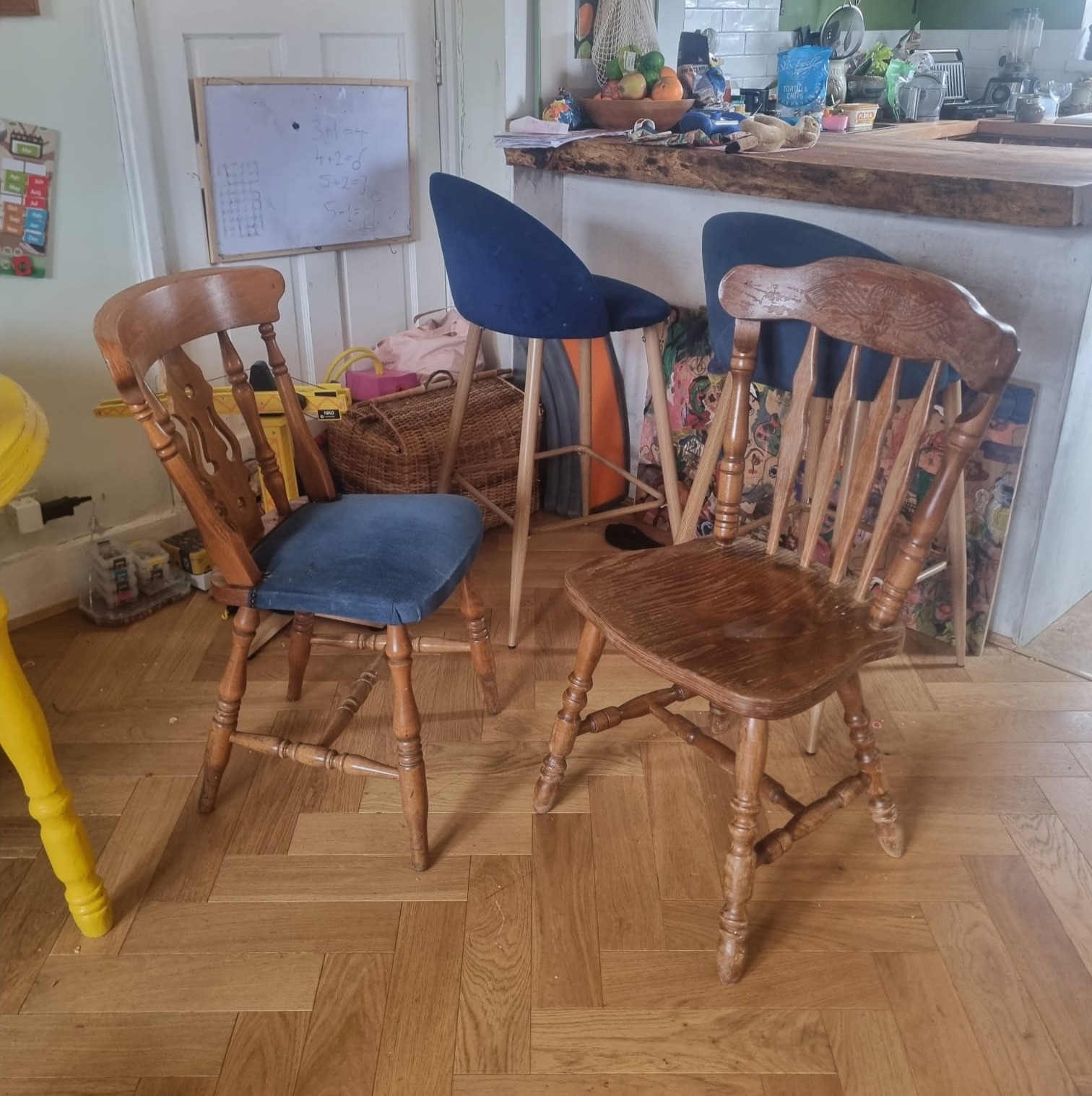
There are two paintings by Van Gogh that I love. The first is pretty iconic, one that you will probably be able to visualise straight away. Van Gogh’s Chair is a simple, plain wooden seat, straw-bottomed, sitting empty on terracotta tiles in a yellow room. It is striking and forlorn and wistful all at the same time and on the seat, his pipe and a pouch of tobacco.
The second painting is Paul Gauguin’s Chair which was done as the first Chair's companion piece at exactly the same time, in December 1888.
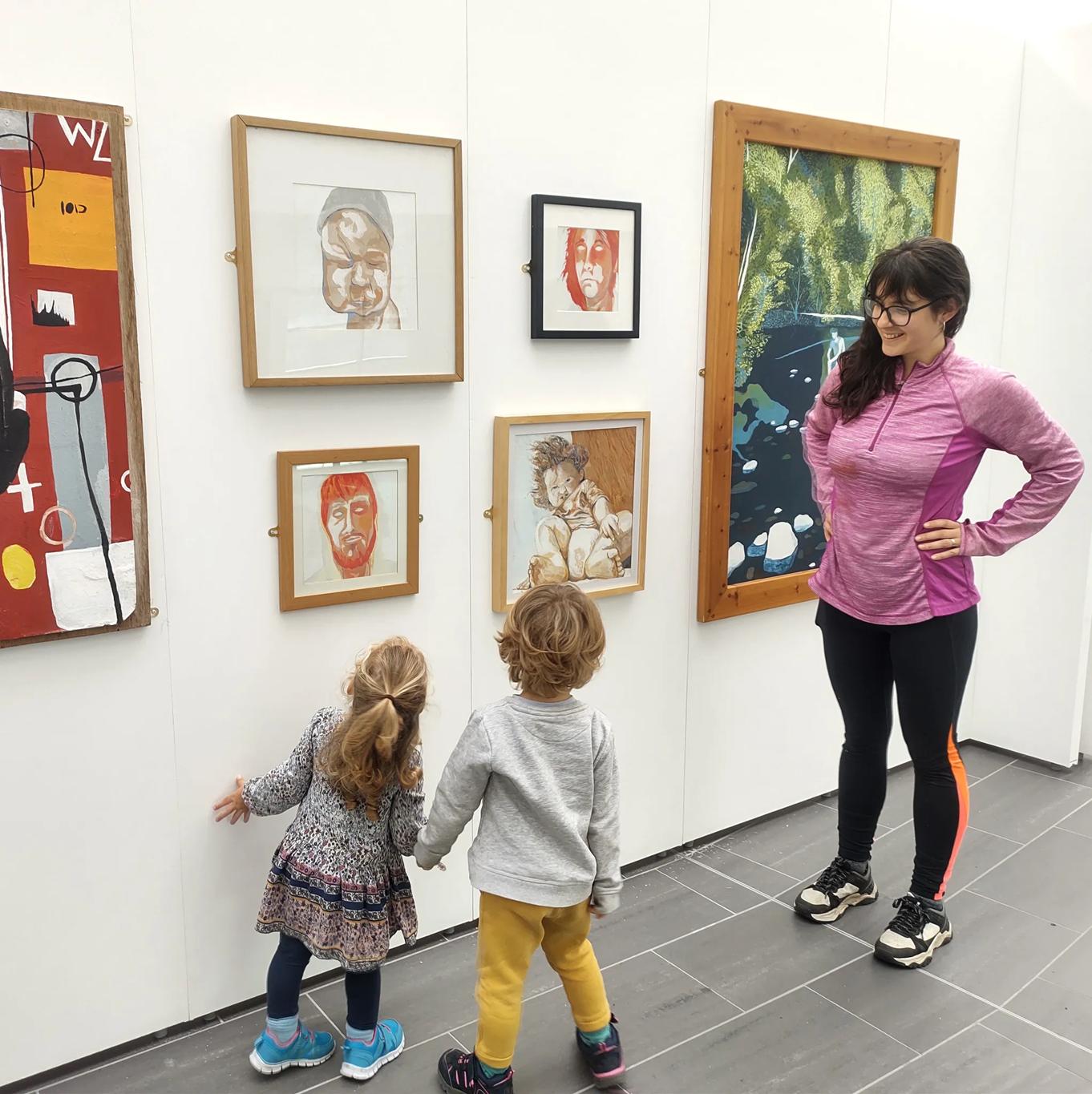
Communicate, Conceive, Connect - What Comes Next?
Communicate, Conceive, Connect was the vision of Sára Irlanda, a midwife who now works at NHS Grampian, who had the idea and the drive to make the exhibition a reality. She was joined by artist Anna Winberg and by me. What we made together was not a straightforward exhibition of artwork. It was an argument made in objects, installations, and images that parenthood is a developmentally vulnerable time, that becoming a parent involves a complex negotiation of identity and relationship and loss, and that these experiences are too often unspoken, unseen, and unsupported.
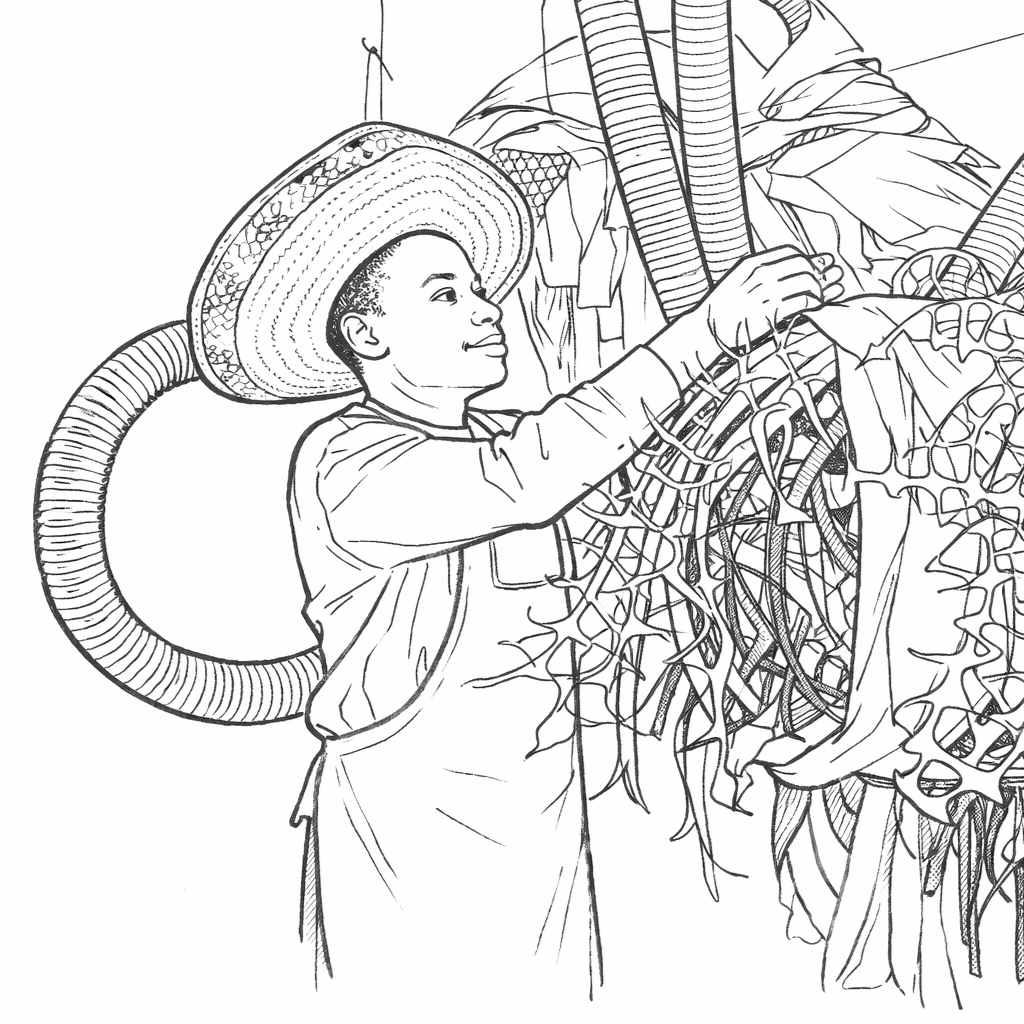
Nnena Kalu, the Turner Prize, and What It Means for Disabled Artists
In December 2025, something happened in British art that felt genuinely historic. Nnena Kalu is a 59-year-old sculptor who makes vast, cocoon-like hanging structures from VHS tape, masking tape, clingfilm, and cardboard tubing. She has became the first artist with a learning disability to win the Turner Prize since its inception in 1984. She beat three other shortlisted artists at a ceremony in Bradford last year.
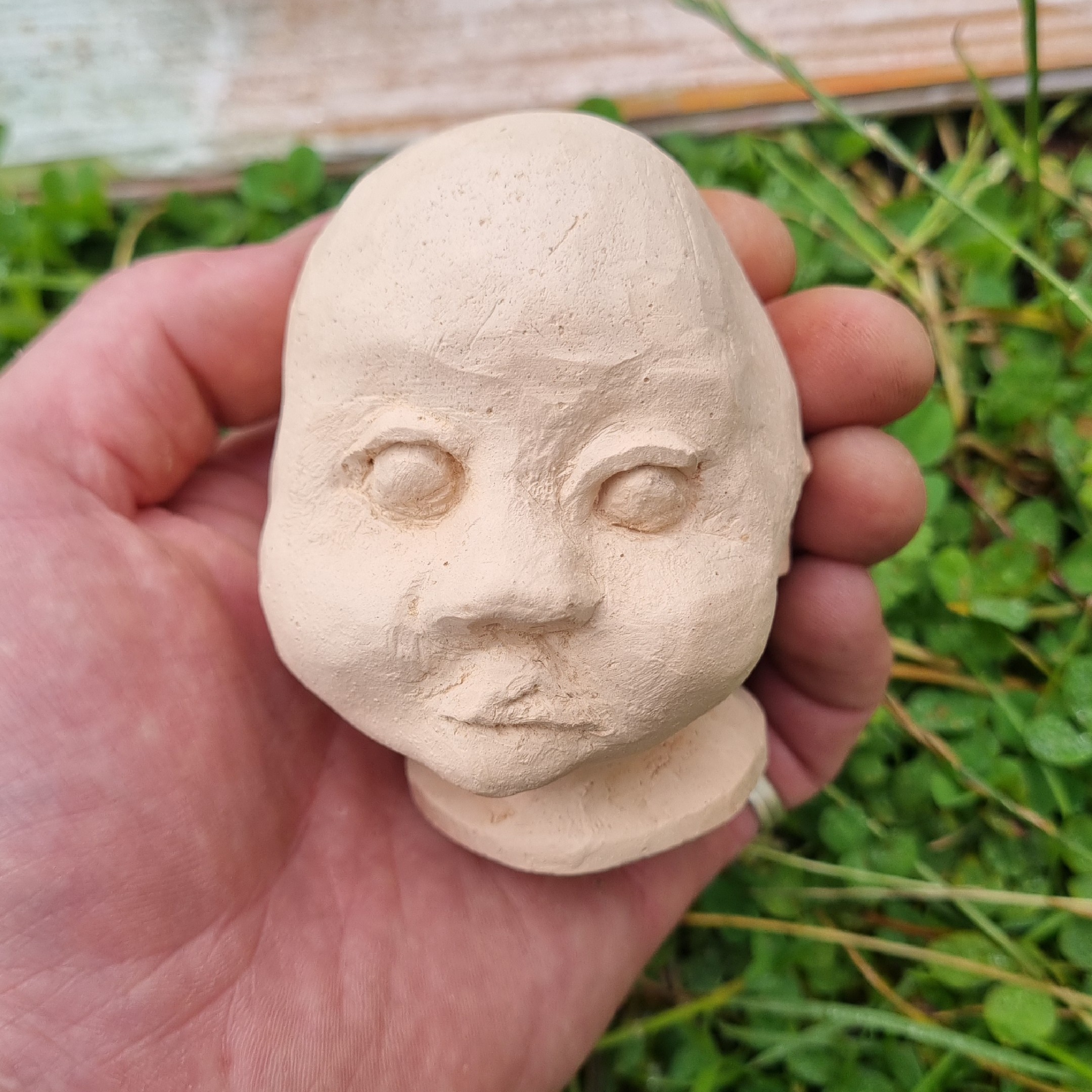
The estimated number of children and babies killed in Gaza over the course of the genocidal war is (or at least was when I began this project) 20,000 . Twenty thousand lives. Twenty thousand futures. A number so large it inevitably becomes abstract, a faceless statistic.
The Vertex Project is my attempt to undo that abstraction.
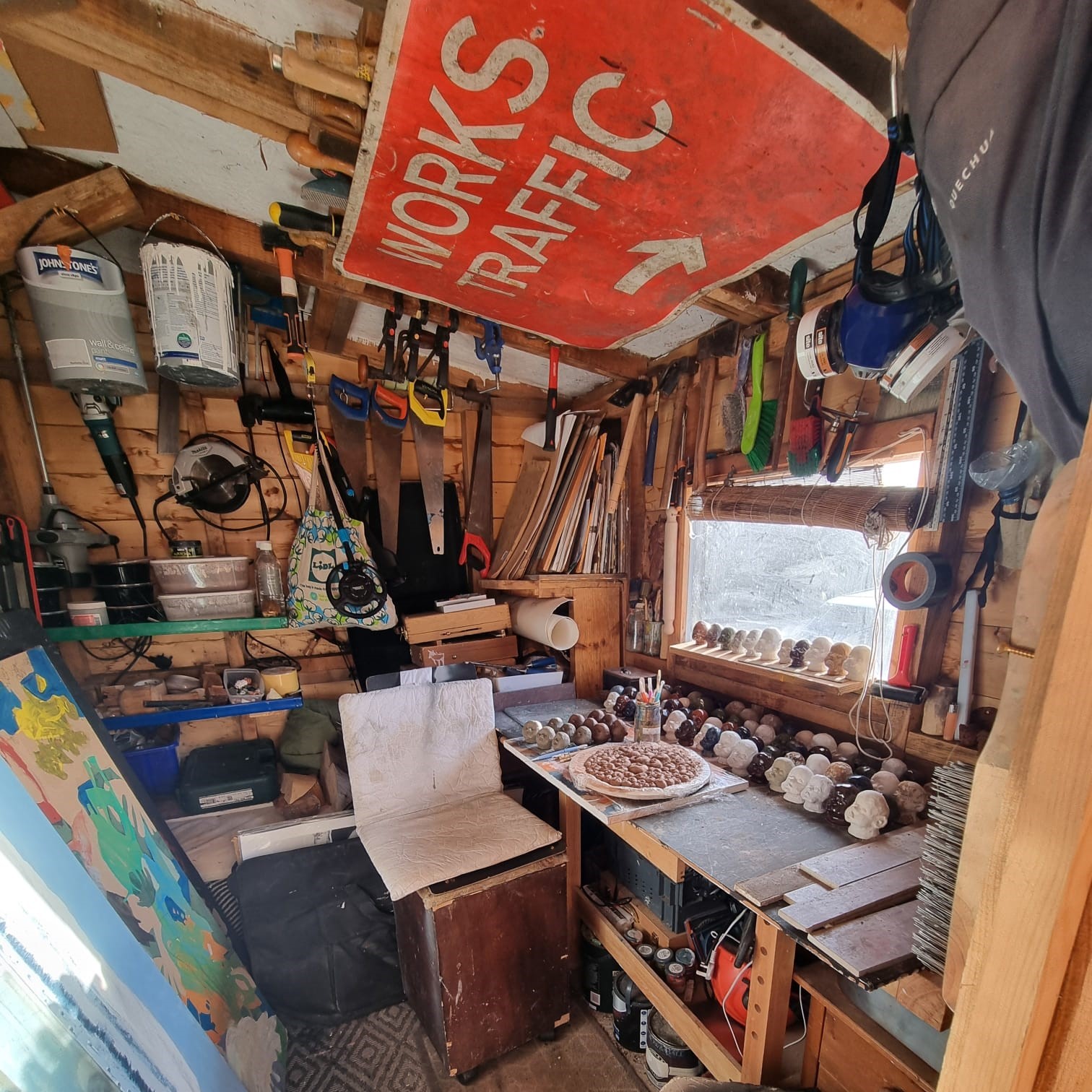
The studio is a shed.
Tucked away in the Highlands, it is a crowded, organised chaos of tools, materials, and works-in-progress that reflects the breadth and physicality of the practice that happens inside it. Handsaws, clamps, chisels, and power tools line the walls alongside paint, glazes, and canvases. A belt sander sits ready. Ceramic baby heads form a crowd or audience and interact with each other in spontaneous stories.
This website is my digital portfolio, showcasing my artwork and projects. It serves as a space to connect with customers and collaborators, and as an evolving archive documenting my artistic practice, exhibitions, and ongoing work.