Project
TheBaby Calendars
About theProject
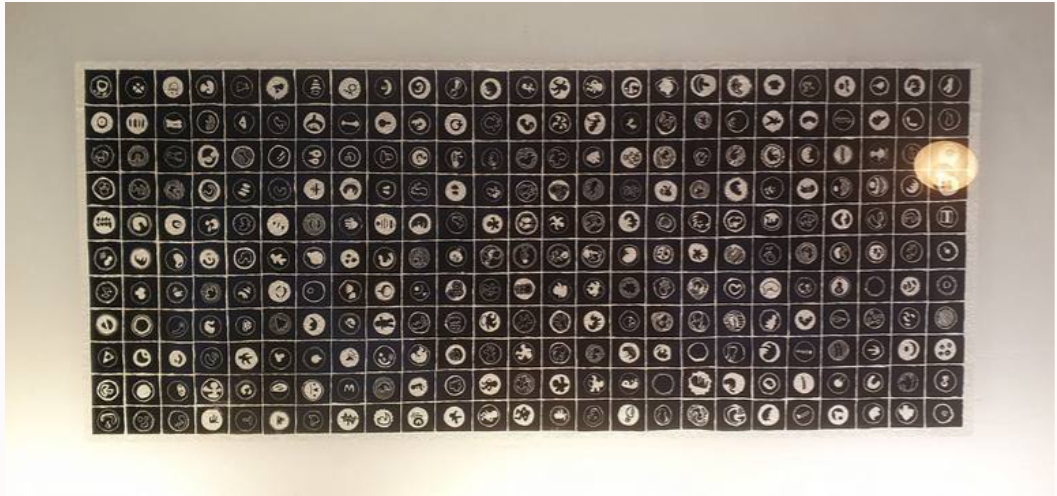
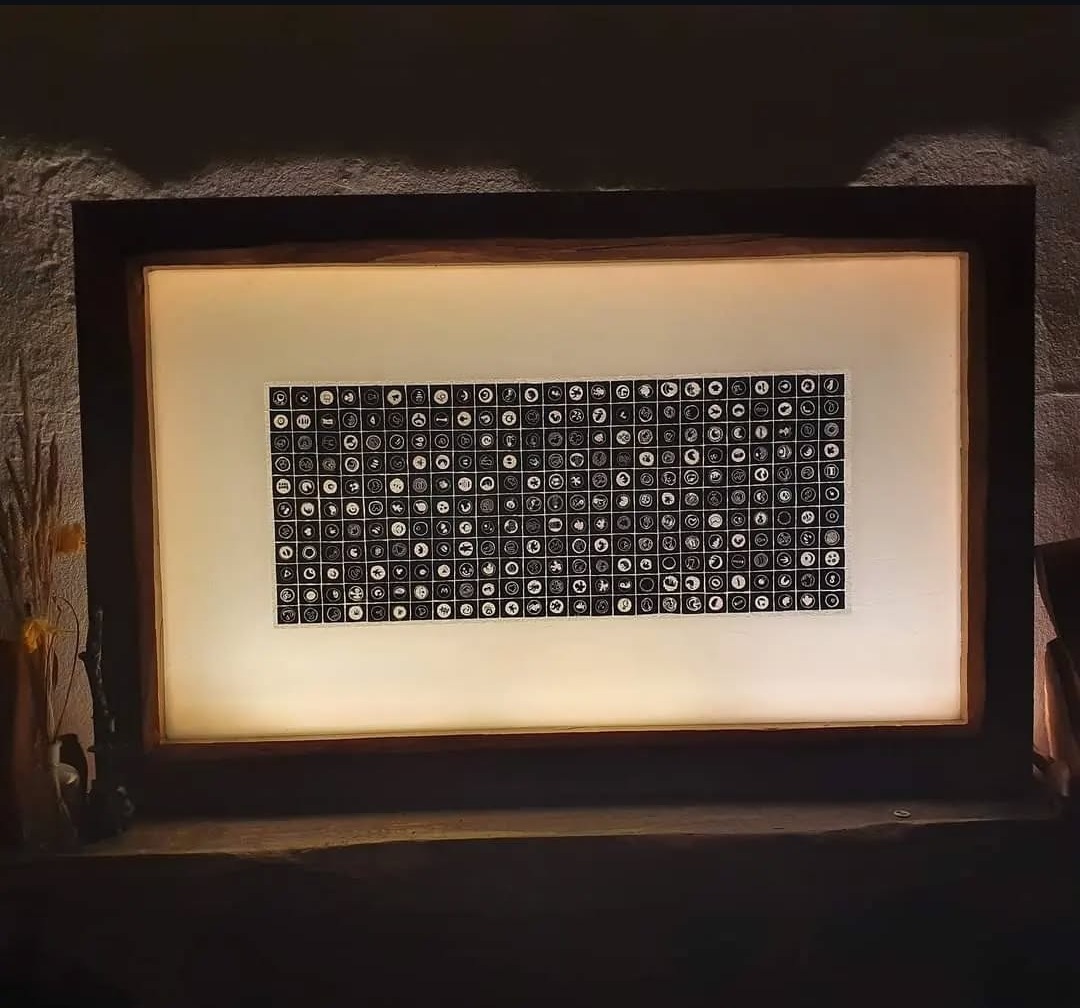
Baby Calendars (2024) emerged from one of the most intimate collaborations possible: conversations between an artist and the mother of his children about pregnancy, development, loss, and hope. Created for the Communicate Conceive Connect exhibition, this work transforms private experience into structured visual language, using seriality and systematic documentation to make visible what often remains unseen or unspoken.
The Work
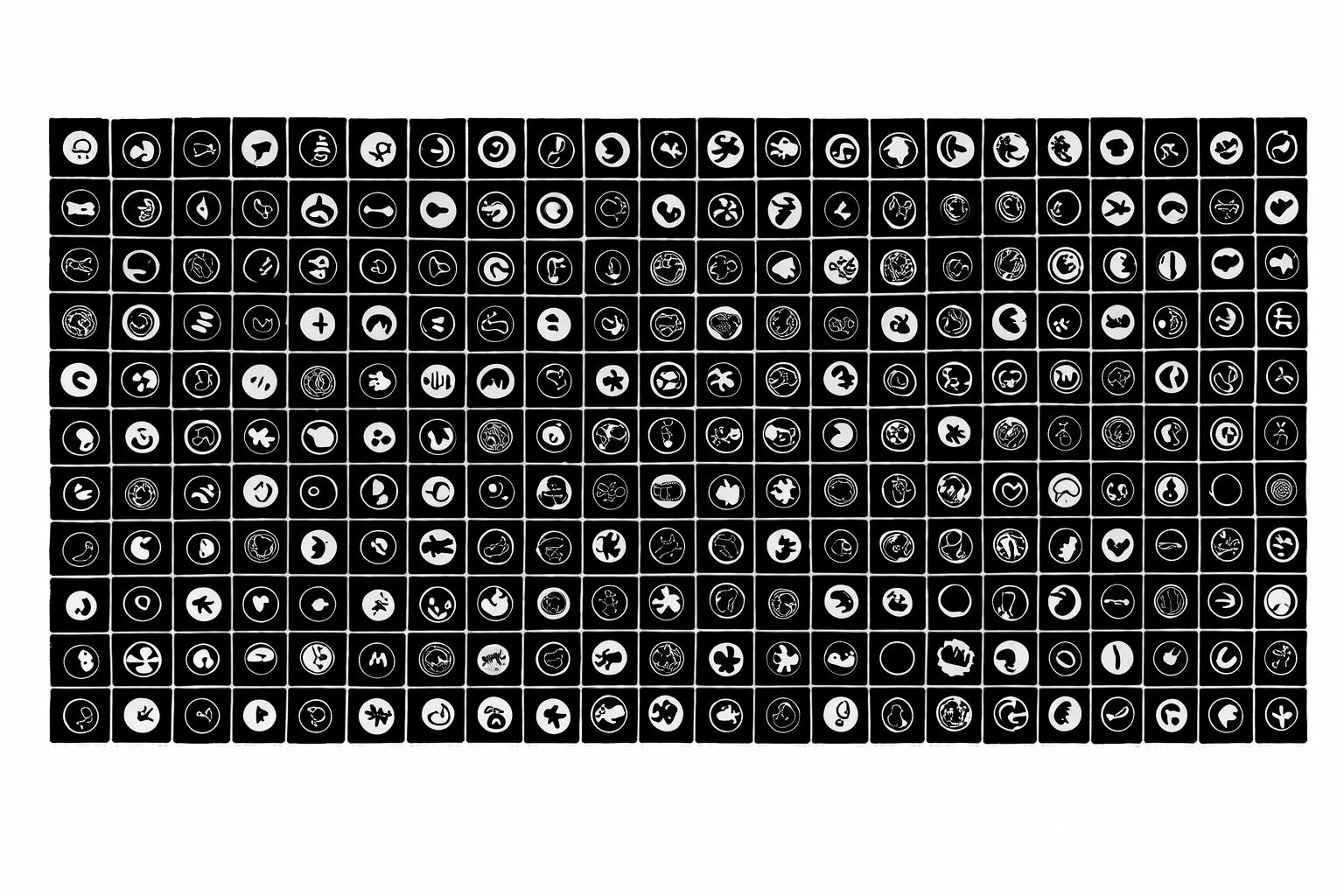
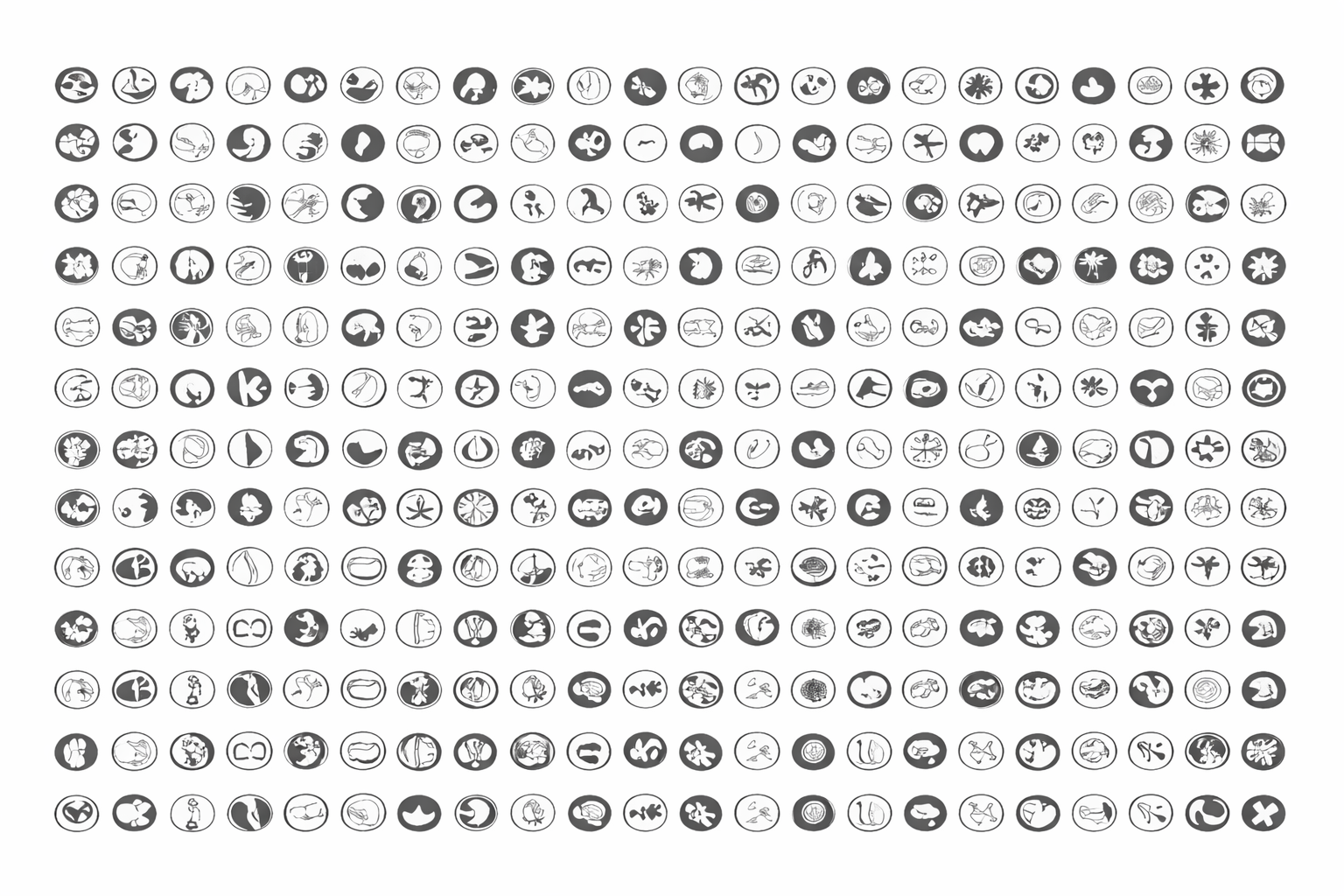
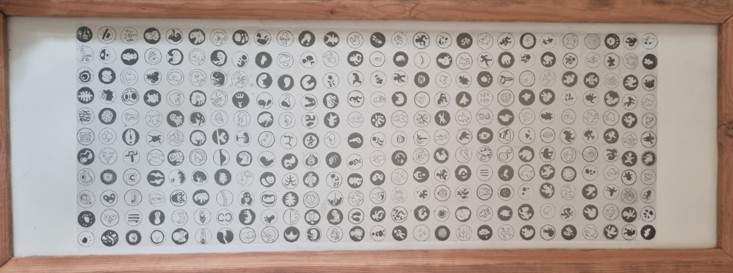
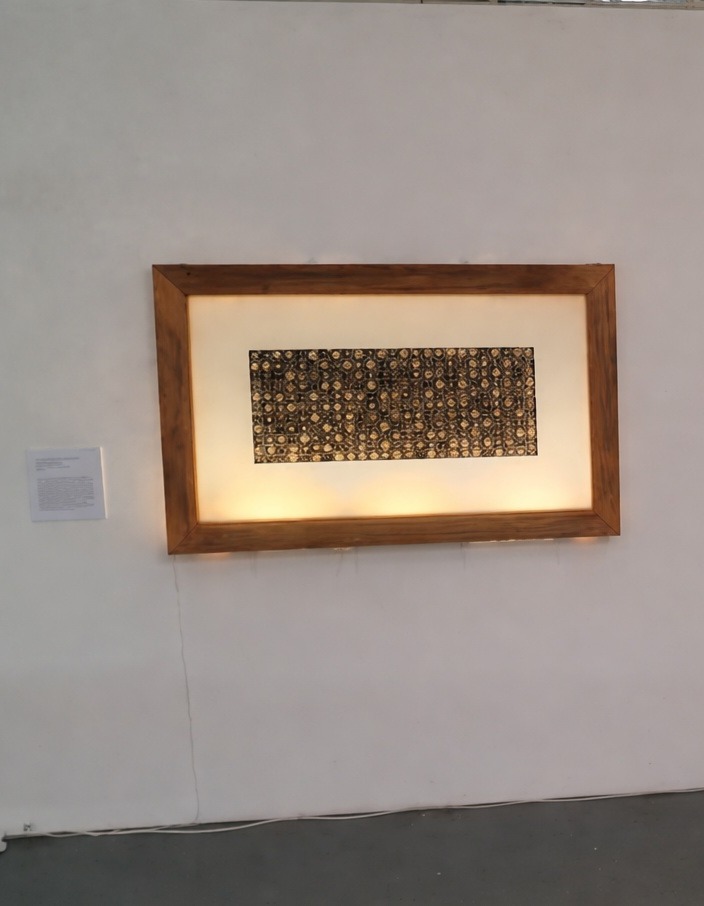
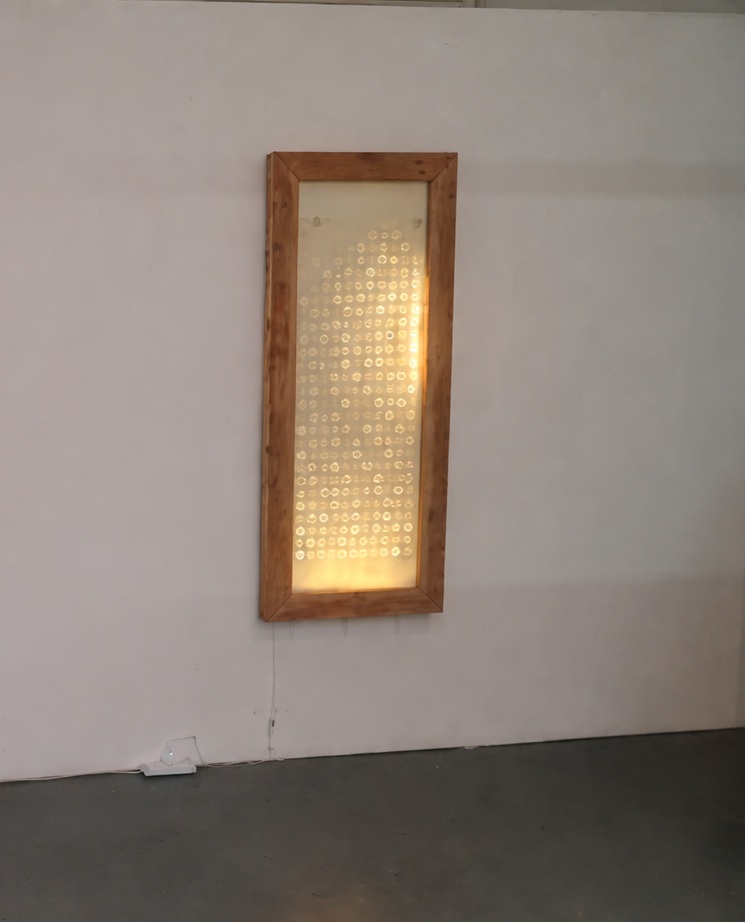
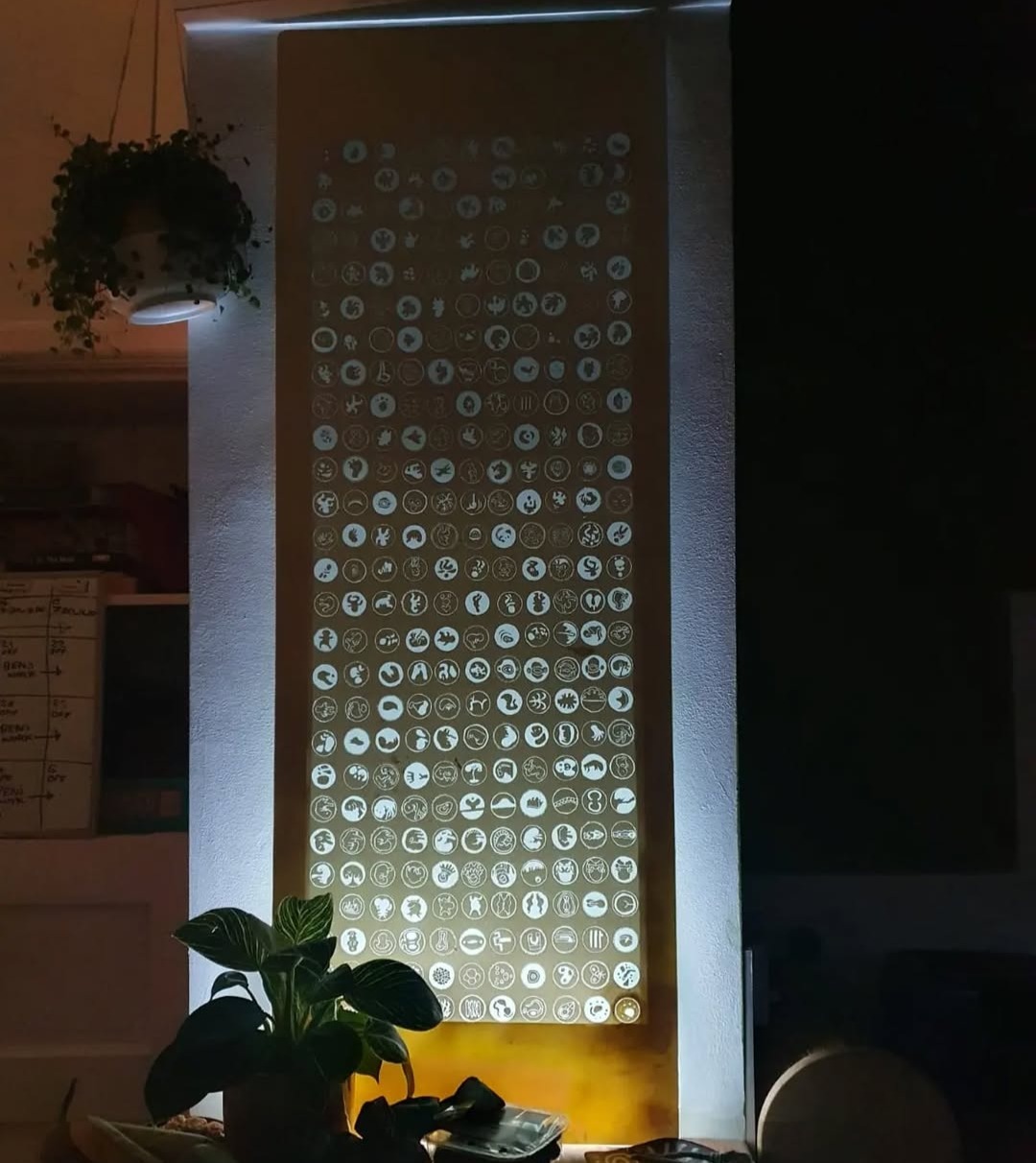
The piece consists of two large panels of reinforced glass, painted black, then etched and framed in construction timber. The first panel contains 264 circles; the second, 297. Each circle represents a single day in the womb of an unborn child. Together, they map three pregnancies: the first ending in miscarriage (roughly the first six rows of the black panel), a second and third pregnancy documented approximately a year later (one ending with an emergency c-section), and the eventual births of a son and daughter.
Each etched symbol is the product of conversation, discussions with my partner about what she felt physically and emotionally, combined with research into foetal development. The grid structure records not just biological progression but the rhythms of anticipation, fear, joy, and uncertainty that accompany pregnancy.
Context: Communicate, Conceive, Connect
Baby Calendars was central to an exhibition that brought together artists, families, and midwives to present parenthood through multiple lived perspectives. The exhibition sought to break taboos around pregnancy and maternity care by foregrounding voices and experiences often unseen or unspoken, particularly around miscarriage, isolation during pregnancy, difficult births, and the complex emotional terrain of early attachment.
Alongside other works in the exhibition, Baby Calendars created space where parenthood, vulnerability, bonding, and wellbeing could be viewed as relational and dynamic processes rather than fixed states. It offered viewers, many of whom had experienced pregnancy loss, difficult births, or parenting challenges, a way to engage empathetically with experiences of isolation, integration, and early attachment that the exhibition aimed to highlight.
Conceptual Lineage
Baby Calendars sits within a lineage of conceptual art that uses seriality, structure, and systems as expressive media. The grid of day-by-day symbols recalls On Kawara's date paintings and other durational works that make time visible through repeated form. Artists like Hanne Darboven and Tehching Hsieh have similarly used systematic documentation to render temporal experience concrete and legible.
But where much conceptual seriality tends toward abstraction or philosophical investigation of time itself, Baby Calendars anchors systematic form in deeply personal, embodied experience. The grid becomes a site of relational meaning rather than pure abstraction. Each square holds not an abstract unit of time but a specific day of conversation, research, worry, or wonder.
The use of etched glass as medium invokes Marcel Duchamp's The Bride Stripped Bare by Her Bachelors, Even (The Large Glass), where glass functions not just as material but as space of transmission, barrier, and layered meaning. Like Duchamp's work, Baby Calendars translates embodied, private experience into structural vocabulary that operates simultaneously as intimate testimony and conceptual investigation. The transparency of glass allows light to pass through while the etched marks create opacity, a metaphor for how pregnancy makes visible what was previously hidden, even as much remains unknowable.
Making Meaning from Loss
The first six rows of the black panel, documenting a pregnancy that ended in miscarriage, refuse to treat loss as absence. These days are present, marked, counted. The work insists that pregnancies ending in miscarriage are not failed attempts but real experiences deserving documentation and remembrance. By giving equal formal weight to all days across all pregnancies, Baby Calendars resists hierarchies that privilege "successful" outcomes over experiences of loss.
This is particularly significant given how rarely miscarriage is discussed publicly or memorialised visually. The grid structure provides a way to honour what was lost without sentimentality, through the simple act of systematic counting and marking. Each symbol acknowledges: this day happened. This life was forming. This mattered.
Collaboration and Co-Creation
Crucially, Baby Calendars is collaborative. Each symbol emerged from conversation, not my interpretation imposed on my partner's experience, but negotiated meaning developed together. This collaborative process mirrors the relational nature of pregnancy itself: not something happening to one person but between people, involving the pregnant person, the developing child, partners, midwives, and wider networks of care.
The work also involved research, consulting medical texts, pregnancy guides, developmental timelines, layering scientific knowledge with subjective experience. The symbols thus synthesise multiple forms of knowledge: embodied sensation, medical science, emotional response, and shared meaning-making between partners.
Time, Structure, and the Everyday
Like other systematic works in my practice (Into the Ground, the 20,000 project), Baby Calendars uses repetition and accumulation to make overwhelming experience manageable and visible. Breaking pregnancy into day-by-day units creates rhythm and structure. It transforms the sometimes unbearable wait (will this pregnancy continue? will the baby be healthy?) into countable increments.
The grid also emphasises pregnancy's mundane temporality. Alongside dramatic moments (scans, kicks, complications, birth) are hundreds of ordinary days. The work honors this everydayness: the slow accumulation of cells, the gradual expansion, the daily wondering and waiting that constitute most of pregnancy's duration.
Exhibition and Response
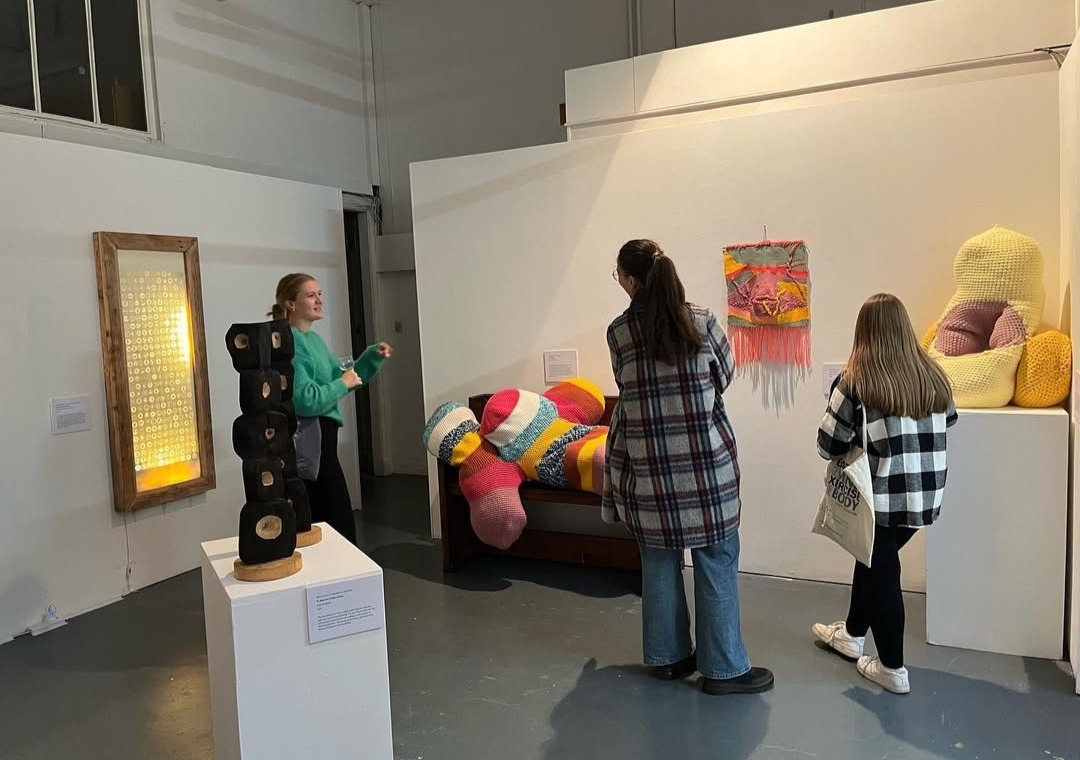
Displayed in Communicate Conceive Connect, Baby Calendars was positioned alongside the black wooden baby totems I carved—monumental, weighty presences contrasting with the delicate etched glass. Together, they offered different registers for engaging with parenthood: the fragile transparency of glass suggesting vulnerability and process; the solid wood suggesting permanence and weight.
Viewers responded powerfully, particularly those who had experienced pregnancy loss. The work gave form to experiences often felt as formless grief without clear object, or loss of potential rather than realised person. By making miscarriage visible within the same systematic structure as "successful" pregnancies, the work validated experiences often minimised or dismissed.