Communicate, Conceive, Connect - What Comes Next?
Communicate, Conceive, Connect was the vision of Sára Irlanda, a midwife who now works at NHS Grampian, who had the idea and the drive to make the exhibition a reality. She was joined by artist Anna Winberg and by me. What we made together was not a straightforward exhibition of artwork. It was an argument made in objects, installations, and images that parenthood is a developmentally vulnerable time, that becoming a parent involves a complex negotiation of identity and relationship and loss, and that these experiences are too often unspoken, unseen, and unsupported.
The three words of the title, Communicate, Conceive, Connect trace a journey: from the moment of conception and all the physical and emotional upheaval that precedes and follows it, to the social and relational transitions of becoming a family, to the ways in which people communicate across the distances that parenthood can both create and close.
The works in the exhibition were objects born of that process of negotiation and language-making. Some came from my own practice including the Baby Calendars, two large pieces made from painted reinforced glass, covered in black paint and etched, each small square representing a single day in the womb. The black piece begins with the early rows of our first pregnancy, which ended in miscarriage. It continues through a second and third pregnancy one ending in an emergency caesarean and the births of a son and daughter. Each symbol is the product of a conversation with the mother about what she felt at that stage, and research into how the baby was developing. The white glass piece holds the same structure but in a different register: lighter, more open, tracking a different arc of the same experience.
The wooden sculptures in the exhibition, burned-black carved figures of babies and mother-child compositions were made from salvaged logs, the charring technique echoing both preservation and loss. Three stood in the gallery space. Together with the glass calendars, they formed a kind of private archive made public: a family's experience of pregnancy, miscarriage, birth, and becoming, translated into material form and offered to strangers to recognise themselves in.
Anna Winberg's work brought different perspectives on integration and becoming unified, on the isolation and loneliness that can accompany the experience that is supposed to be purely joyful. And Sára's curation drew works from the RGU collection into dialogue with all of this, creating a space where the midwife's gaze, the parent's experience, and the new-born's arrival into the world could sit alongside one another without one drowning out the others.
Why it mattered
Parenthood is surrounded by a strange kind of enforced positivity. The cultural script is well-established: wanted pregnancy, healthy birth, bonding and love and joy. The script is real, those things are real. But layered beneath and alongside them are experiences that do not fit so easily. Miscarriage affects around one in four pregnancies and is still largely undiscussed. Birth trauma is common and frequently unacknowledged. The identity disruption of becoming a parents, particularly for mothers, is enormous and largely invisible. Partners and fathers navigate their own complex territory of responsibility and helplessness. The exhibition sought to make space for all of this: not to replace the positive narrative, but to complicate it, to make room for the full range of what becoming a family actually involves.
Sára brought to this her training as a midwife and her deep understanding of the clinical and emotional dimensions of the perinatal period. She understood that art can do something clinical language often cannot: it can allow people to recognise their own experience without being told what it is. Visitors to the exhibition found themselves standing in front of objects that gave form to things they had felt but not been able to name.
That felt like exactly what art is for.
What comes next: the intrapartum period
We are now planning a second exhibition!
The first exhibition moved through conception and gestation, the before. The second will turn its attention to the intrapartum period: the experience of labour and birth itself. This is the moment of most acute transition, and in many ways the least openly discussed. Birth is everywhere, in culture, in language, in metaphor, and yet the actual experience of labouring, of the physical and psychological demands of that passage, remains strangely hidden. Birth plans get made. Birth stories get told, selectively, at dinner parties. But the raw reality of what happens in that room, for the person giving birth and for those present with them, is rarely given the space it deserves.
The intrapartum period is also, clinically, a period of significant risk and complexity. Sára has published academic work examining maternal suicide and the perinatal period as a developmentally vulnerable time; our collaboration with her gives the second exhibition both artistic ambition and clinical grounding. We want to make work that is honest about difficulty, about fear, pain, loss of control, the possibility of things going wrong, the experience of emergency intervention, as well as about the power and transformation of birth when it goes well. We want to create a space where people who have been through difficult births can find something that reflects their experience, and where healthcare professionals can be reminded of what it feels like to be on the other side.
More details will follow as the project develops. If you are a midwife, a parent, an artist, or simply someone who has had an experience of birth and you would like to be part of this conversation, please get in touch. This kind of work grows through exactly those connections.
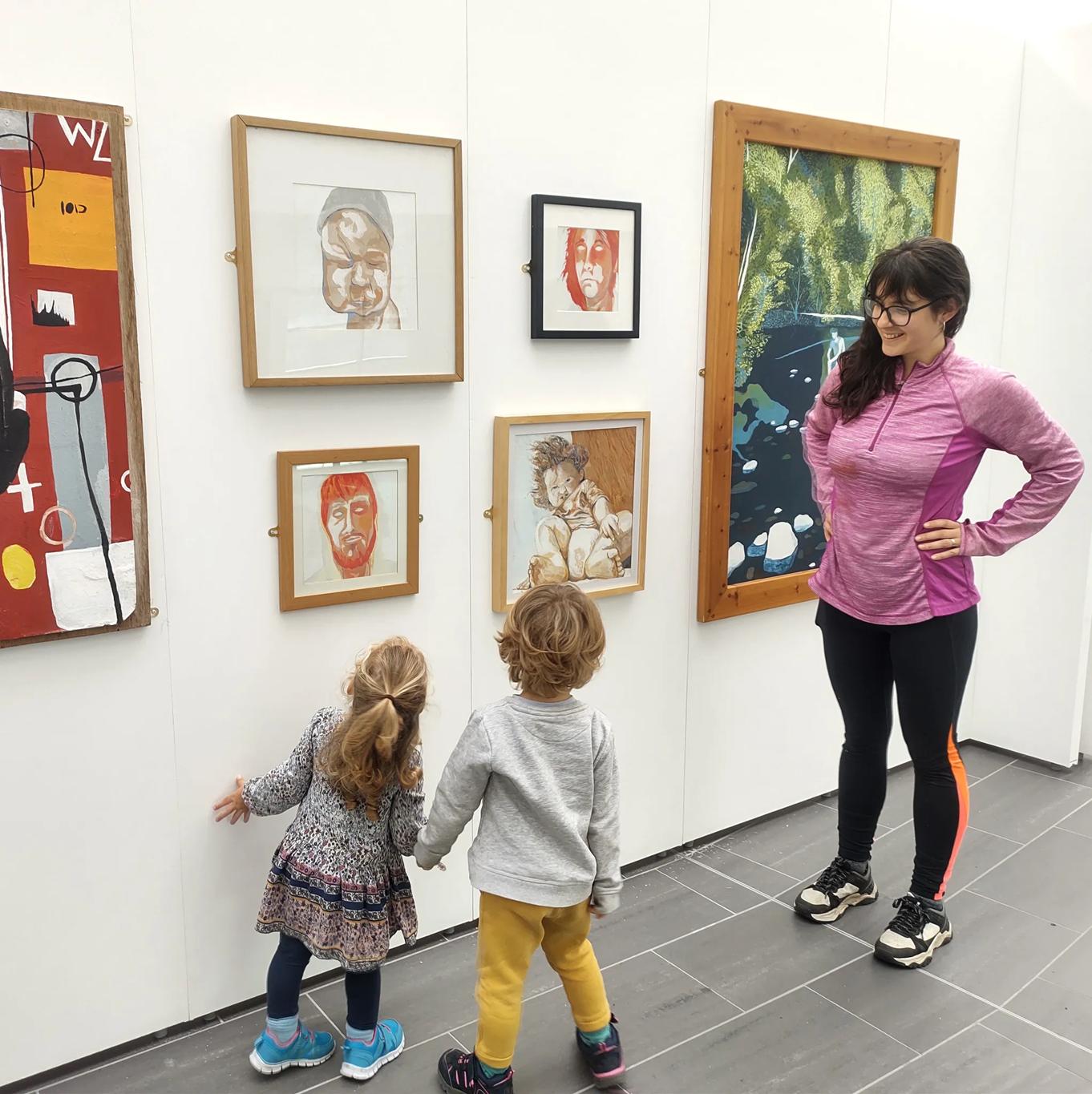
Communicate, Conceive, Connect was hosted at the Sir Ian Wood Building, RGU and the Arkade Gallery, Aberdeen, September 2023. The exhibition was curated by Sára Irlanda and featured work by Dr Benjamin Clubbs Coldron and Anna Winberg alongside selected works from the RGU Art and Heritage Collection.